
Recurring or One-Time Commercial Cleaning: Which Does Your Business Need?
Most businesses call a cleaning company already knowing something needs to happen, but not knowing which arrangement fits. Recurring versus one-time commercial cleaning in New Jersey is a real decision with cost and operational consequences, and picking the wrong one wastes money in both directions. Sign a recurring contract for a space that only needed a reset, and you pay monthly for work that was never necessary. Book one-time cleanings for a property that generates daily soil, and you pay premium rates repeatedly while the building steadily declines between visits. The choice comes down to whether your cleaning need is a condition or an event. This article breaks down what each arrangement actually covers, how the pricing structures differ, which situations point clearly to one or the other, and the questions to ask before committing to either. The goal is a decision you can defend on a budget line, not a guess.
What Recurring Commercial Cleaning Covers
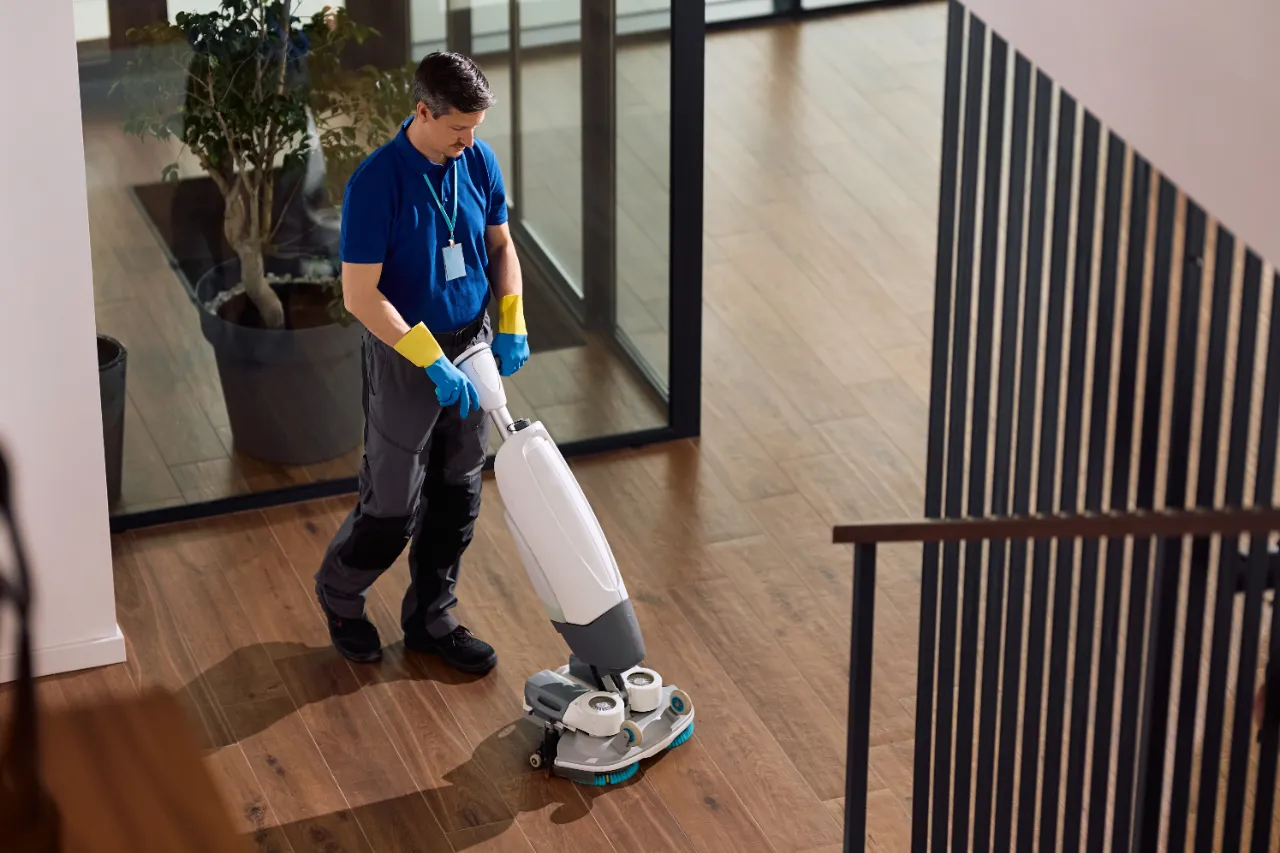
Recurring cleaning is an ongoing contract with a fixed schedule and a written scope. Service runs daily, several times weekly, weekly, or monthly, and the same tasks repeat every visit. The advantage is predictability in both directions: you know what the building will look like, and you know what it costs each month. Recurring arrangements also let the same crew learn your property, which reduces the time spent explaining access, priorities, and problem areas. For commercial properties in New Jersey with steady foot traffic, shared restrooms, or client-facing space, this is almost always the right structure. The cleaning need is continuous, so the arrangement should be too.
What One-Time Commercial Cleaning Covers
One-time cleaning is a single job with no ongoing commitment. It fits specific events: a move-out, a post-renovation cleanup, a pre-inspection reset, or a property being prepared for sale or lease. The scope is usually deeper than a recurring visit, because the space has accumulated months or years of buildup that routine work never addressed. Pricing reflects that, so a one-time cleaning costs more per visit than a recurring one covering the same square footage. That is not a markup. It is the difference between maintaining a condition and correcting one, and it is why using one-time service as a substitute for recurring cleaning gets expensive fast.
How the Costs Actually Compare
The comparison people make is per visit, and that is the wrong frame. Recurring cleaning costs less per visit but runs continuously, so the annual number is higher. One-time cleaning costs more per visit but only happens when booked. The useful comparison is cost per year against condition maintained. A property cleaned recurring stays in the same condition indefinitely. A property cleaned once or twice a year degrades between visits and needs progressively deeper work each time, which raises the price of every subsequent booking. For most commercial properties the recurring model wins on total cost within the first year, and the gap widens after that.
How to Decide Between Them
Start with a simple question: is the mess generated continuously, or did it accumulate from a specific event? Daily foot traffic, shared restrooms, and customer-facing space are continuous, and they point to a recurring contract. A renovation, a departing tenant, or a building that sat empty are events, and they point to one-time service. Some properties need both, starting with a one-time deep cleaning to establish a baseline and then a recurring schedule to hold it. That combination is common and usually cheaper than asking a recurring schedule to slowly dig out years of buildup on its own. Decide the sequence before you request quotes from anyone.